Amanda Wingfield
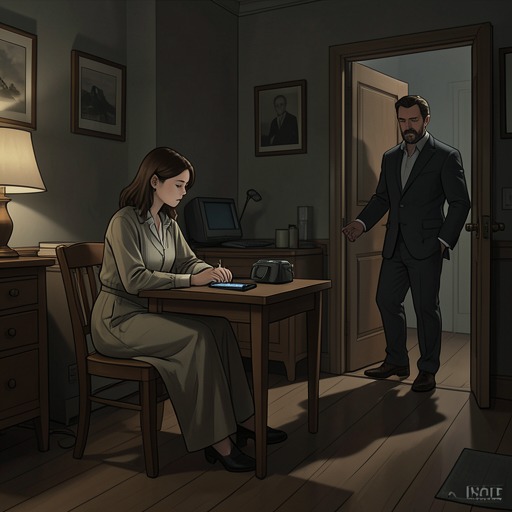
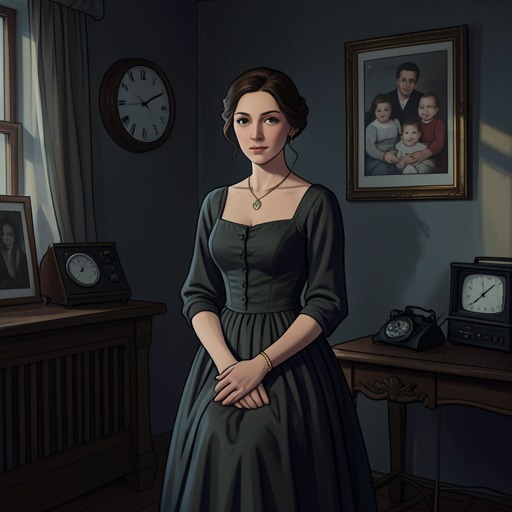
The Glass MenagerieAmanda Wingfield is a mother sustained by forceful memories of a vanished Southern life, but those memories also shape the pressure she places on her children. In St. Louis, she tries to secure Laura’s future through marriage and to keep Tom from leaving before Laura is provided for. Her nostalgia is comic in its extravagance and painful in its consequences: it gives her a vivid identity, but repeatedly draws her away from the family’s precarious present.
Identity and Background
The play’s introductory characterization presents Amanda as a small woman with great, confused vitality, clinging intensely to another time and place. She is not simply a deluded figure to be dismissed: her endurance and a kind of heroism coexist with foolishness that can make her unwittingly cruel. The same portrait insists on her tenderness, making her a figure to admire and pity as well as laugh at. Her vividness lies in this unstable combination: she can dominate a room with remembered triumphs while remaining exposed to the disappointments those memories conceal.
Her recollections establish the social world from which she comes. In Blue Mountain, she tells her children, seventeen gentlemen callers visited in a single Sunday afternoon, so many that the household needed folding chairs. She remembers her callers as gentlemen and singles out prominent young planters and their sons from the Mississippi Delta. These stories are not merely a record of popularity. They preserve an image of a woman surrounded by status, attention, and the prospect of a secure match—an image she carries into a household where the old social arrangements no longer protect her or her children.
Amanda gives that vanished world a cast of particular figures and sharply remembered outcomes. Champ Laughlin later became vice-president of the Delta Planters Bank; Hadley Stevenson drowned in Moon Lake and left his widow government bonds. Bates Cutrere, one of Amanda’s former beaux, was shot after a quarrel with Wainwright at Moon Lake Casino and died on the way to Memphis; Amanda says he carried her picture. The young Fitzhugh, admired by girls across the Delta, never married. These details make her reminiscence more than a general claim to former beauty: she remembers the callers’ later fortunes and deaths, placing her own past inside a social landscape of courtship, money, and loss.
Nostalgia and Performance
Amanda’s memories return as staged scenes, not quiet recollections. When she recounts her former callers, Tom remains at the portieres and prompts the music and light; Amanda’s eyes lift, her face glows, and her voice turns elegiac. The theatrical shift shows how memory temporarily remakes the room around her. Her past is most alive when performed, and its vividness contrasts with the limits of her present circumstances.
The old dress she retrieves from a trunk makes that performance physical. She appears in a yellowed voile frock with a blue silk sash and jonquils, recalling the cotillion, two cakewalk victories at Sunset Hill, and a Governor’s Ball in Jackson. She says she wore the dress on Sundays for callers and on the day she met her future husband. Her account of the spring when she gathered jonquils everywhere ends with that meeting, then returns to the immediate evening as she hopes the men will arrive before the rain. The old garment and flowers connect remembered courtship to the present effort to welcome a caller for Laura, while the transition also reveals how readily Amanda’s own romantic past supplies the script for her daughter’s future.
That script is organized around the planter world she expected to enter. Amanda tells Jim that she imagined marrying a planter, raising a family on a large estate, and living with servants; instead, she married a telephone-company worker, the man pictured in the family home. She describes him as having fallen in love with long-distance travel and says she does not know where he is now. Her account both mourns the lost prospect of gracious living and identifies the rupture at the center of her family history: the husband she chose departed, leaving her to manage the household without the future she had imagined.
Family Responsibility and Conflict
Amanda’s plans for Laura arise from an urgent fear of dependency. She says Laura is two years older than Tom and appears to drift without direction, a condition that frightens her. A business-college course has ended in failure after Laura became sick with anxiety, and an attempt to involve her in a church young people’s group also came to nothing: Laura spoke to no one, and no one spoke to her. Amanda sees her daughter’s retreat to glass and old records not as a sufficient life but as evidence that the family has no settled provision for her.
When Laura says she could not face the course, Amanda imagines the future in stark economic terms. She fears an unmarried woman without a position will depend on relatives, be barely tolerated, and live in a small room under the grudging patronage of in-laws. She asks whether that is the future they have mapped out, then acknowledges marriage as another possibility. Her fears are shaped by the options she can see: the business career has failed, and financial independence has not been secured. As a result, the hoped-for marriage is at once a personal hope for Laura and a practical answer to the prospect of lifelong dependence.
The same calculation informs Amanda’s confrontation with Tom. Having seen the Merchant Marine letter, she recognizes that he dreams of leaving and compares his unexplained absences to those of his father, who eventually went away. She does not say that Tom must remain forever; instead, she insists that he cannot go until someone is ready to take his place. If Laura marries, has a home of her own, and becomes independent, Amanda says, Tom will be free to go wherever he wishes. Her demand makes the mother-son conflict inseparable from her concern for Laura: she tries to hold Tom in the household because she believes her daughter cannot yet manage without him.
Amanda turns that concern into preparations for the gentleman caller. She insists that the household cannot receive him in disorder: wedding silver must be polished, monogrammed linen laundered, windows washed, fresh curtains hung, and clothing considered. She emphasizes that no young man has yet been introduced to Laura. When Laura resists the improvised powder inserts Amanda calls “Gay Deceivers,” Amanda insists that she will wear them. The preparations reveal care expressed through control: Amanda wants Laura to appear suitable for courtship, but her intervention also imposes her own standards on a daughter whose shyness and uncertainty she struggles to accommodate.
Class, Gender, and the Present
Amanda’s nostalgia preserves a world ordered by class and gender. In her recollections, servants, planters, callers, dances, and family land form a coherent picture of security and status. In the present, that order has disappeared. She tells Jim that the servants are gone and that she was unprepared for the future that followed; she no longer lives among the conditions that once made her social expectations seem attainable. Her memories therefore carry a social history as well as a personal one, marking the distance between the privileges she recalls and the household she now tries to maintain.
The play’s opening places the family within a wider economic and political crisis. Tom, speaking as the play’s remembering narrator, describes the return to the 1930s and an economy that is dissolving. He contrasts revolution and the bombing of Guernica in Spain with labor disturbances and confusion in American cities, including Chicago and St. Louis. Amanda’s personal anxieties take shape against this stated social background, though the play distinguishes the broad crisis from her particular circumstances. Her immediate concern is not an abstract diagnosis of the era but the household’s lack of a dependable future for Laura.
Amanda’s longing for a respectable past thus has two edges. The world she remembers offers a vocabulary of status and courtship, and she uses it to imagine security for her daughter. Yet the same ideals restrict her practical alternatives: employment and social participation have not produced a workable path for Laura, so Amanda returns to marriage and family provision. Her elaborate preparations for a caller are hopeful, but they also make visible the narrowness of the hope on which she relies.
Character and Narrative Significance
Amanda’s force comes from the tension between what she remembers and what she can do. She is not merely an emblem of illusion: she recognizes Laura’s vulnerability, worries about dependence, and attempts to arrange material protection. But she interprets that duty through the values of a past whose promise of land, servants, and advantageous marriage did not become her own life. The result is care that can become pressure, and courage that cannot by itself repair the conditions that produced her fear.
Because Tom frames the play as memory, Amanda appears through a recollection whose theatrical devices make the past rise into the present. Music, light, costume, flowers, and the staged recounting of callers give her remembered identity a force that ordinary realism would not. The performance does not erase the household’s difficulties; instead, it sets Amanda’s brightness against them. Her remembered courtship becomes both an inheritance she tries to pass to Laura and a measure of how far the family has fallen from the future she once expected.